Sunday, April 1, 2012

Not all Deaf are at Gallaudet

We try to volunteer in the Deaf community as much as possible. We often ask people if they know any Deaf people or where they may live so that we may offer support and direction to community resources. Too often the answer is, "Ummmm...no...oh but you may want to try that Deaf college....Gallaudet." Ugghhhh!!!! There is so much more to the Deaf community than Gallaudet.

Please don't get me wrong, Gallaudet is the premier Liberal Arts University for those that use Sign Language. It is absolutely amazing, to be at a place that uses visual language. When people are learning a language, they are told to go to the country where that language is used. At Gallaudet, you can go to the "country" of ASL. It's like a little city of "Deaf space." Gallaudet is a beautiful thing.

However, there are many Deaf that do not go to Gallaudet. Does this make them less Deaf? Or does it mean they are deaf (to be clarified in a later blog). I interviewed one such person. Does this person share some or any cultural norms of the Deaf community?

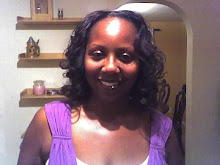
This young lady was born 1989 in Nigeria. Imo Ambasie of State in Euguguiogu to be exact. She was brought here around the age of 13 or 14. But for her time in Africa, she attended a Deaf school, Kano River State.

When she came to America (she's been here for about seven years), she was placed in a mainstreaming situation at Eleanor Roosevelt High School. She graduated June 3, 2011. But can you imagine what she had to get used to? Coming from a Deaf school where EVERYTHING is accessible with the use of a visual language to now being placed in a self contained classroom with periods of time with non-deaf kids? Or can you imagine knowing British Sign Language but coming here and having to learn the manual alphabet. Or what about her friends? She had to leave her friends at such an age when friendships are forged to last into adulthood.

In her family there is her mom, dad, two sisters, two brothers, this young land, then a baby brother. To date none of them use Sign language. They communicate with each other by writing back and forth, pointing and gesturing and using the VP. One sister says she is interested in learning Sign Language and one of her brothers is planning to take it up in college next year.

But why hasn't this young one who has a supportive and loving family chosen NOT to attend Gallaudet? She states its hard to pass the SAT. So she has chosen to start at a local college. Also she is receiving training in Baltimore, MD at a program that teaches life skills and employment training. She is being trained for hotel work.

This young lady is such "the young person." She is interested in soccer, cooking Nigerian food, fashion, and helping others.

Can you see that although this young woman hasn't decided on Gallaudet University (not yet anyway) that she is still Deaf?

So when you think of Deaf/deaf, don't just think Gallaudet University.

Next blog, "What is the difference between deaf and Deaf?

Monday, March 19, 2012

Deaf Blind Interpreting

Recently I have been volunteering to do deaf-blind interpreting which is very different . One thing I had to learn is that each Deaf-Blind (DB) person's needs is different. There could be a person who is Deaf but gradually lost their sight, or gradually losing their sight; there could be a person who is Blind but gradually losing their hearing; or a person who has recently become deaf and blind. The combinations can go on and on but the point is that working with a DB person requires the ability to be flexible.

For the Registry of Interpreters' standard of Deaf-Blind interpreting please follow this link: www.rid.org/UserFiles/File/pdfs/Standard_Practice_Papers/Drafts_June_2006/Deaf-Blind_SPP(1).pdf.

For now though, I would like to share my recent experiences working with one particular DB person. This person is tactile. According to our industry's standard referenced above, tactile means, "�� sign language received by sense of touch with one or two hands (tactile) �� fingerspelling received by sense of touch (tactile)." I will use the pseudo name, Francesca.

Attention getting with Francesca is little different. Unlike deaf individuals that may prefer a tap on the shoulder, with Francesca, I lightly bump my hand with hers to indicate, "Hey, there, I'm here." Most times Francesca "answers" by signing, "Who?" Whereas a Deaf person could see "Who?", a DB person can not see "Who;" thereby the need to CONSISTENTLY identify individuals when they are "speaking/signing." I answer by placing my dominant hand under her left hand and articulate my sign name. Then cordialities are exchanged.

The discourse is preceded with an ASL song. As the audience stands to "sing" the ASL song, Francesca stands but turns to face me. She has made the decision to use both of her hands so that she can "track" what I am signing. This means she will place her hands on top of mine as I am copying the ASL song being played from a DVD. This can be tricky because there are signs and grammar that are on the face or head that a DB person cannot see. There is a constant consideration as to how this will be executed (what linguistic equivalent can be used?) Negations and emotions are a few examples. Vigilance is key.

Once the song is finished, the audience takes their seats and now its time for the discourse. Francesca likes to know the name of the presenter, where he is from, and what medium is he using (iPad or paper outline, or pictures). One thing that impresses me in this process is that Francesca is able to ascertain if the speaker is new to Sign language or not.

At one time in her life, Francesca was able to see enough and was an art major. As her sight deteriorated, things changed. Knowing this helps me know that when pictures are used during the ASL songs or the discourse, I can describe color to Francesca and she can paint a similar thought image in her mind's eye.

At another meeting, the logistics are a little different than the discourse explained above. The reason being this meeting is now opened to the public for their comments. The discourse has a one directional flow of information. But when the public is involved other consumer needs come into play. For example, Francesca likes and demands (as consumers we all demand or "order" what we want, right?) knowing who is speaking and what general direction they are sitting. If there is a change in audience seating, this needs to be conveyed.

Francesca has a hearing dog. Similar to a seeing eye dog, this dog leads her around. So unlike SSP, when I am working with Francesca, I do not have to lead her around. Her dog does that job. There are times though when Francesca wants to meet a specific person. Maybe I have informed her during the meeting that there are visitors or new faces that are not familiar. Sometimes she will ask me or others to lead her to such ones.

At a party a spotted Francesca dancing with her non-deaf husband who is uber fluent is ASL. She was doing the electric slide.

This woman, her husband, and her dog have gone and done so many things. In fact, she has lived in Honduras and there too, she was very independent!

Another amazing thing is when we go to Starbucks or the like, Francesca doesn't depend on others to order for her. She has a machine that she carries cross-body (like a messenger style bag) that she uses to receive emails, text messages, and she uses gps. I don't know the name of the device but it sends and receives signals from her personal devices and converts those signals to a signal to this device that will help her "read" messages. This hip device converts the signals to Braille. Her hip device uses pins that automatically convert to Braille and it scrolls across. I am sure I am not explaining this awesome experience clearly but believe me it is jaw dropping.

There are so many other nuances that just floor me working with Francesca. I am biased. Yes, working with Francesca is one of my secret joys. But I need to experience others. What are their preferences? How do I work with each one of them? One strong resource if you are interested is Ms. Rhonda Jacobs. Check RID website for her contact info and she can fill you in and get you connected to yet another spectrum of Deaf culture.

Until later,
Keep it Simple


Wednesday, January 4, 2012

Sign Language Interpreter--What to expect?

Using a Sign Language interpreter may seem to be an awkward experience. "What do I expect?" "What is expected of me?" "Do I need to speak slower than usual?" "What do I do?" This blog will answer some basic questions.

First of all, professional standard is to have the interpreter arrive approx 10-15 mins prior to the assignment. This time is for the interpreter to prepare for the assignment (spelling of names, obtaining an agenda, locating the room of the event, etc).

Professional standard dictates the interpreter to wear a solid, color of clothing that contrasts with their skin color. The reason is that the clothing acts as a backdrop for the visual communication.

The Standard Practice Paper, Professional Sign Language Interpreting states, "...the interpreter sits in proximity to the.... speaker to allow the deaf person to see the interpreter as well as the facial and body expressions of the English speaker." This is a very different than spoken language interpreters/translators.

During the interpreting process, there is no need to exaggerate or slow down a person's normal way of speaking. This is a misnomer. There are times when the interpreter may ask for a restatement of what was said; but again, in most circumstances, the speaker does not need to change the way they normally speak.

Because of the introduction of a third person (the interpreter), it is very easy to slip into speaking ABOUT the deaf person in third person. "Please tell HIM that we are about to start the interview." "Can you tell HER that we will refund her money." These can be avoided by looking the deaf individual in the eye (as opposed to looking at the interpreter) and addressing the person directly ("Mr. Jones, we are about to start the interview," "Jane, we will have to refund your money.")

This interaction is going through an interpreted process. You may have to give some time after asking a question or before conclude your interactions. This is to assure the process of interpreting/translating has been accomplished.

Many interpreters are Generalist, but we also have interpreters that specialize in: medical, legal, performing (concerts, plays, etc.), educational, and conventions/conferences.

What is put forth in this post is not the end all or be all. This is not "Working With an Interpreter 101." This post is not to be a standard. This post is only to give an idea of what may be expected when working with professional and/or certified interpreters.

For more information on our professional entity, please go to www.rid.org. This is the Registry of Interpreters for the Deaf website. Here you can find our Standard Practice Papers and even locate Sign Language interpreters in your area.

Please feel free to contact me at 301.KIS.3433 0r 301.547.3433 for more info. You can also send an email to kisinterpreting@gmail.com.


Next blog: What if the person is deaf-blind?

Thank you!


Friday, December 17, 2010

Meylin and Damen's wedding 2010--Trilingual Wedding


Beautiful wedding!

Congrats!

You can't tell from the pictures, but this was a trilingual wedding. The wedding discourse was given in English, translated to Spanish and American Sign Language. The bride and groom exchanged vows that were in ASL and voice-interpreted to English.

The bride's family members all remarked how impressed there were to see the accommodations made to meet everyone's needs. This access allowed all to participate in such a momentous occasion of their loved ones.

Watching the Spanish interpretation reminded one of UN meetings; the interpreter wearing headphones, interpreting into a microphone or a device, and those receiving the interpretation wearing earpieces. Very well coordinated effort. And all was at no charge to the couple!!


Heba and Dave's wedding celebration Dec, 2010--Multi-Cultural Wedding


WOW! What an awesome celebration and a privilege to be invited!

I don't think that I have pictures that show all of the attendees. It was such diverse sea of people, cultures, and backgrounds. Wonderful time!

There were many Gallaudet students and staff in attendance. Many of them enjoyed the belly dancing instruction as shown above. This wedding was very rich with multiple cultures.

Thanks, Heba and Dave!

Tuesday, May 11, 2010

What About Being QUAD Lingual and Deaf??


Saturday afternoon, My husband and I decided to enjoy the pollen tempest and take a nice brisk walk via the footpath over? under (maybe around?) the Woodrow Wilson Bridge from National Harbor.

Such a clear day, perfect for signing. I wondered if we would see any members of the Deaf community? Yes, I am a NERDA (Not Even Related to a Deaf Adult) Plus, it just felt good to be outdoors. It was sunny and bright (nothing casting a shadow). Beautiful day despite being extremely windy.

"Over there......,""Where?" My husband asks. With everything blowing around, maybe I'm seeing things. My "saving-my-energy-for -the-trail walk" turned into a brisk walk to....Why, yes! Sign Language!!!! Yippie!!!!

Well, as it turns out, all of the Deaf we met were from Saudi Arabia and there was a Hard of Hearing woman from Iran. So how did we communicate since ASL is AMERICAN Sign Language and is not universal? These individuals are QUAD linguist. They are fluent in their country's spoken language, their country's sign language, ASL, and English. One person told me that he wanted to learn Spanish!!!! So we were able to converse using ASL. WHOA!!! How many Americans can say that we know more than English?

Also, they were college students. They had spent time learning ASL (many at Gallaudet) then transferred to other colleges to further their education.

What an experience!!!! So yeah....keep on the look out for Signing hands and let me know.

Sign Language Gathering Tuesday, March 30, 2010


Around Spring time, peoples' minds start to drift toward purple, a crown of thorns, easter eggs, a bunny, and Christ's ressurrection. However, I attended an event that focused on Christ's DEATH. Interesting concept....is this when the bunny comes in? or maybe the pastel colored eggs? Or maybe the chocolate shaped into miniature bunnies....yummmmm....ummmm wait a minute....Christ's death. Yeah.....seems like Christs death has nothing to do with those things.

Anyway, Tuesday, March 30, 2010, the fact that Christ gave his life for many, the reason WHY he needed to do that, and how we benefit from that sacrifice was the topic of this lecture in FULL ASL! Scriptures and everything!!! Equal access for all! What a commemoration!!!

Deaf, Hard of Hearing, CODA's, and non-Deaf all totaled 109 in attendance. This same group was invited back on Saturday, April 17, 2010 to discuss the answer to the question, "Real Peace and Security--When?" using the Bible (ASL).

Tuesday, March 16, 2010

QuestFest@Gallaudet University March 1-14, 2010


QuestFest describes itself as, "QuestFest is a two-week international festival celebrating visual theatre. QuestFest features groundbreaking work from exceptional performers and companies dedicated to the use of movement, gesture, and digital media to tell stories. By stripping away the artifice of language, QuestFest builds bridges between disparate communities and cultures.....", "Celebrating visual theatre..."

For two weeks, March 1-14, 2010, some QuestFest performances were hosted at the Baltimore Theatre Project and Creative Alliance at the Patterson, while the bulk of the performances were at Gallaudet University.


The first presentation on Saturday, March 6, 2010 at 6:30pm was Alonzo's Lullaby by Nana Projects (funded by the Jim Henson Foundation. Outside the venue, we were greeted by Stiltwalkers. QuestFest's website explains Nana Projects to be a "non-profit company of visual alchemists inventing innovative artwork blending puppetry, performance art and public spectacle." One could even add optical illusionists to this list. The story unfolds by using three individual projectors (light sources) for shadow (cut-out) puppets and slides. The program states that the creation of such a performance, takes "1,200 hours to complete one 18-minute show!" A one dimensional paper or medium designed to give the audience the feel of seeing a trapeze artist or acrobat hanging like a bat from a suspended swing, in preparation for the spin curl jump to another swing? Then, when the spin curl jump is executed by the one dimensional shadow, the audience sees the background moving and changing to give one the feeling of continuous motion and a fall through space (one dimensional space, remind you). Optical illusionists. Mood and ambiance is set by the melodious voices and instrument playing of the two musicians.

The Foster Auditorium hosted a performance by David Gaines, "7 (x1) Samurai." The QuestFest website describes Mr. Gaines performance as, "...mime, storytelling, and clown to recreate the renowned 3 hour movie in the space of 60 minutes." Acrobatic would be an understatement for most. Mr. Gaines "jumps and slides" and hurls himself all over and across the stage so that he can "jump or slide" into character(s) with his presentation performance. The audience doesn't get lost; especially with the bipolar masks. These two masks were thoughtfully and painstakingly designed and crafted. The masks almost function like landmarks or scenery changes. Yet once the masks come off, the audience has an opportunity to ask questions of the actor who asks the audience to start asking questions of the director first to give the actor time to take off the makeup (LOL--the actor and the director are one and the same---{well, at least they house the same body}). This performer artist seems to be very personable, funny, seemed to have a warm personality and genuineness about him (giggle--a person who works hiding behind a mask is genuine-ha). Also, Mr. Gaines was willing (very aptly) to learn and incorporate Sign Language for the short spoken lines. What an artist!!!! The ability to work in different mediums!


During our short visit here most of the attendees were not from the Gallaudet community. There were other performances that had a stronger draw (possibly Nano and Gin and Tonic). Soooo......if you know of any Deaf events, let us know! Thanks

What an experience! But then again, most quests are!

Friday, February 26, 2010

The Spread of Sign Language in a Religious Setting


These are pictures and statistics for the growth of Religious meetings with instruction in Sign Language. Awesome stats!

Monday, July 27, 2009

Deafness, Chiropractic care, and a Black American Business Owner in 1895

In 1895, there was a doctor by the name of Daniel David "D.D." Palmer who thought he had the cure for Deafness by chiropractic care. How so?

Mr. Harvey Lillard, a deaf, African-American owner/janitor of a janitorial company that maintained the building in which Dr Palmer was an occupant, came to the doctor complaining of back pain and hearing loss. As doctors do, Dr. Palmer commenced asking questions (eg: how long have you had this problem, what was the onset of this problem, etc--nothing stipulates HOW this communication took place). Lillard explained that he had been deaf or had a hearing loss for approximately 17 years. The incident: "in a stooped position, he heard something 'pop' in his spine and immediately suffered a loss of most of his hearing."


"Palmer felt that Lillard's hearing loss was due to a blockage of the spinal nerves which control the inner ear. Ultimately, this nerve blockage and bone misalignment 'vertebral subluxations', lessend the body's ability to function by disrupting communication over the nerve system. When Palmer corrected the misalignment by pushing the vertebrae back into place, the nerve pathways were reopened and thus Lillard's hearing was restored. "

Supposedly Dr Palmer adjusted Mr. Lillard's back and, Viola!, hearing restored. Dr. Palmer reportedly THOUGHT he had a cure for deafness. However, this was untrue. He reopened pathways for the pathological hearing loss to be restored.

For me this was an interesting find. First of all because some sources claim Mr. Lillard (African-American in 1895) was the owner of a janitorial company. Secondly, this is supposedly the first instance of chiropractic care. Thirdly, this is a good example of the difference between Deaf and deaf.

What is the difference? If a person is Deaf, the focus is their culture (residential schools, visual language for communication, a social network of people who use sign language, thinking "Deaf" etc). Yet if a person is deaf, their focus is hearing loss.


Please note, I am NOT an expert on anything noted here. This is just interesting information that was brought to my attention thanks to Chiropractor, Dr. Graux in Bowie, MD.

Details of this story were from: http://www.drjagger.com/lillard.html

Thanks for visiting!

Wednesday, March 25, 2009

Erika Peters

Erika was a friendly person who wanted the best for her kids. Erika was always working to improve her and her family's lot in life.

To Erika Peters' family and friends: The grief is indescribable. Please know that you are in our thoughts and efforts of support.

The Father of tender mercies does not act wickedly and therefore did not plan for this to happen, but comforts us in all our tribulation.

We hope that this is a source of encouragement.

You are in our hearts and minds,

***KISIS***
kis@att.blackberry.net

FREE TAX PREP @ GALLAUDET

This information is posted at Gallaudet (as of 3/25/2009):


Free tax prep. Gallaudet University, Business Department. Ely Center 202D. March 26, 27, and 28, 2009, Thursday, March 26 and Friday, March 27, 2009 hours are 10am-5pm. Saturday, March 28, 2009 hours are 9am to 1pm.


Not sure if this is only offered to Gallaudet students, alumni, staff or offered to all. Not sure. Please confirm.


Also, there is a posting at Gallaudet for a presentation entitled, "Erase theHate; Enough isms"! This will be at Gallaudet Wednesday, April 8, 2009 6pm at Foster Auditorium.


***KISIS***

Friday, March 13, 2009

FOOD BANKS

News reports show Food Banks have seen an influx of people in need.  You may know of people in need.  Here are a few listings:

CAPITAL AREA FOODBANK
645 Taylor St NE
Washington, DC 
202 526 5344 xt230

FAMILY CRISIS CENTER PG CTY
9020 Stevens Lane
Lanham, MD  20706
301 731 1203

FAMILY SERVICE CENTER FOOD BANK
6411 Ager Road 201
Hyattsville, MD  20782
301 559 8804

HUMAN DEVELOPMENT ASSOCIATION
8402 Rambler Drive
Adelphi, MD  20783
301 422 4952

AGER ROAD UM FOOD PANTRY
6301 Ager Road
Hyattsville, MD  20782
301 937 2074

Please contact phone numbers FIRST before going to these facilities.

***KISIS***

A DEAF MUSEUM?

Yes, Gallaudet's Class of 1958 is taking the reins of a museum project that was started a while ago.  The proposed museum was described as, "a museum on Kendall Green ...related to Gallaudet life and the wider deaf community....".

Very interesting!  How to make donations to this effort?  Maybe contact Dr Jane Norman, Professor, Communication Studies Department or Mr. Bill Terrell, Fundraising Chair for the Class of 1958.  Maybe Gallaudet has better contact info if you are interested in donating to this cause.  Gallaudet's main switchboard is 202 651 5000.  

Where else would you like to see a museum of this sort?

This information was published in Gallaudet Today (Winter, 2009).

SEARCH FOR GALLAUDET'S TENTH PRESIDENT

According to Gallaudet Today (Winter, 2009), a Presidential Search Advisory Committee has been established to facilitate search efforts for presidential candidates.  The plans were to have a "presidential search web site in January, 2009, and review applications through the Spring".   

The PSAC is comprised of faculty, alumni, staff, students, administration, and others.  Seems like this body is a cross section of Gallaudet's stakeholders.

An invitation will go out Fall, 2009 to the candidates to meet.  Thereafter,  feedback will be collected by PSAC from Gallaudet's community.  Final decision will be announced in October and new President duties begin January 1, 2010.  

The article gives an email address for comments and/or concerns:  psac@gallaudet.edu.

Who will it be?

Thursday, February 19, 2009

Bilinguality and Bilingualism--Clarification

The previous post attempted to define bilinguality and bilingualism. However, one reader stated what was posted was incorrect. The presenter was contacted and here is clarification:


"Bilinguality is the situation in which a person uses more than one language. Bilingualism is the situation in which more than one language is used in an institution or in a country (though not necessarily by the same people).


So the concepts are not about oppression, but simply describe two different ways to think about bilingualism."--Robert E. Johnson, Professor, Department of Linguistics, Gallaudet University.


Professor Johnson responded that bilingualism is NOT part of the negative "isms" in society.


Thank you to the reader who caught this discrepancy. KISinterpretingservices.blogspot would especially like to express gratitude to Professor Johnson for taking the time to clarify matters.


***KISIS***

Sunday, February 15, 2009

Deaf Bilingual Education--Bilinguality vs Bilingualism

At Gallaudet, February 4, 2009, Mr Robert Johnson presented research that explored bilinguality, bilingualism, and Deaf education. Please note that this blog is not exact representation and is just this attender's understanding.

Mr. Johnson presented that bilinguality focuses on a person's ability to use two languages; whereas, bilingualism, is an institutional suppression (or non recognition) of one's native language and an institutional dominance of the majority language. (How many of us know of individuals who may use Spanish fluently but because of being in an English-dominant environment, suppress their Spanish)? Seeminly bilingualism is yet another negative "ism" in society.

Then Robert Johnson discussed the difference of a minority bilingual and an elite bilingual. Society negatively views a Deaf person whose primary language is ASL with English as a secondary language as a minority bilingual. Whereas, society views positively a non Deaf (hearing) person whose primary language is English but may have acquired or learned American Sign Language as a secondary language. This is the elite bilingual.


When it comes to communication and language access, there is now pressure to attend to the needs of immigrants here in America rather than just letting them sink or swim. This requires a paradigm switch from the "ethical" dialogue to education; specifically "Communication Education".

The reason there needs to be a switch, Mr. Johnson argues, is that with "ethical" dialogue all one needs to do to throw a monkey wrench into the mix is to say, "Well, I disagree with your ethics," and well, that's the end of the issue. Efforts to overcome barriers would have come to a screeching halt. Therefore, "Communication Education" is the counter.

VERY INTERESTING!!!!!!!


What do you think? Let us know by commenting here: kisinterpretingservices.blogspot.com.

If you are interested in obtaining Sign Language Services, please send a text message to 301 213 8653.


***KISIS***

Wednesday, January 7, 2009

ADA Compliance Tax Deductions for Any Size Business

The previous entry had information for tax credits for small businesses. Here is information for tax deductions for businesses of any size.


Although Section 44 of the IRS Code allows a tax credit for small businesses, Section 190 of the IRS Code allows a tax deduction for ALL businesses. The latter is available to all businesses with a maximum deduction of $15,000 per year.


Please note: A tax credit is "subtracted from your tax liability after you calculate your taxes", whereas a tax deduction is "subtracted from your total income before taxes, to establish your taxable income" (http://www.library.findlaw.com/).


Please contact DOJ or the ADA website for more information.


The goal of this blog spot is to provide practical resources and solutions. We hope you found this helpful. Please let us know and visit us at kisinterpretingservices.blogspot.com again! ---KISIS

Friday, January 2, 2009

Tax credits and deductions for complying with the ADA


What relief is there for a small business that wants to continue to provide services to its consumers and patrons? What does the Americans with Disabilities Act (ADA) say about the responsibility of small businesses?


For now a website that may be of help is http://www.ada.gov/. This website has publications that may answer many of your questions. Please note, it may be wise to periodically check the Internet for updates to the Americans with Disabilities Act (ADA). Here are some gems plucked from the pot:


Q: As a small business, what financial relief or assistance is offered when we foot the bill for providing accommodations?

A: "Tax Credits and Deductions To assist businesses with complying with the ADA, Section 44 of the IRS Code allows a tax credit for small businesses and Section 190 of the IRS Code allows a tax deduction for all businesses. The tax credit is available to businesses that have total revenues of $1,000,000 or less in the previous tax year or 30 or fewer full-time employees. This credit can cover 50% of the eligible access expenditures in a year up to $10,250 (maximum credit of $5000). The tax credit can be used to offset the cost of undertaking barrier removal and alterations to improve accessibility; providing accessible formats such as Braille, large print and audio tape; making available a sign language interpreter or a reader for customers or employees, and for purchasing certain adaptive equipment. The tax deduction is available to all businesses with a maximum deduction of $15,000 per year. The tax deduction can be claimed for expenses incurred in barrier removal and alterations. To learn more about the tax credit and tax deduction provisions, contact the DOJ ADA Information Line (see Information Sources for the numbers).


Same website, similar question:


"Q. Are businesses entitled to any tax benefit to help pay for the cost of compliance?


A. As amended in 1990, the Internal Revenue Code allows a deduction of up to $15,000 per year for expenses associated with the removal of qualified architectural and transportation barriers. The 1990 amendment also permits eligible small businesses to receive a tax credit for certain costs of compliance with the ADA. An eligible small business is one whose gross receipts do not exceed $1,000,000 or whose workforce does not consist of more than 30 full-time workers. Qualifying businesses may claim a credit of up to 50 percent of eligible access expenditures that exceed $250 but do not exceed $10,250. Examples of eligible access expenditures include the necessary and reasonable costs of removing architectural, physical, communications, and transportation barriers; providing readers, interpreters, and other auxiliary aids; and acquiring or modifying equipment or devices."


"Q. Are there any limitations on the ADA's auxiliary aids requirements?

A. Yes. The ADA does not require the provision of any auxiliary aid that would result in an undue burden or in a fundamental alteration in the nature of the goods or services provided by a public accommodation. However, the public accommodation is not relieved from the duty to furnish an alternative auxiliary aid, if available, that would not result in a fundamental alteration or undue burden. Both of these limitations are derived from existing regulations and caselaw under section 504 of the Rehabilitation Act and are to be determined on a case-by-case basis."


The goal of this blog spot is to provide practical resources and solutions. We hope you found this helpful. Please let us know and visit us at kisinterpretingservices.blogspot.com again! ---KISIS

Thursday, December 18, 2008

Freelance Sign Language Interpreters

This blog is designed to introduce and discuss Sign Language interpreting services contracting with a freelance interpreter.


Often times, there is a Deaf customer, patient, friend, or individual that has contact with a company, practice, or individual that does not know Sign Language. EEK!! What to do? Knee-jerk reaction is to search the Internet or call the first name or hit from the Internet search to bridge this communication chasm.


However, one quickly learns that attempting to provide cross cultural access to communication via an interpreting Agency can be pricey. Solution? A certified, freelance Sign Language interpreter.


This may prove to be a viable solution. Why? Many of the freelance interpreters have worked many years developing themselves, learning the profession and honing their skills under the very Agencies that you are contacting. Yet, our fees are considerably lower because of not having the same overhead as the Agencies. This means by hiring a freelance, RID-certified Sign Language Interpreter, you are getting, at minimum, the same quality of services you would get if you were to contact interpreting Agencies.

Also freelance interpreters have a network of interpreting practitioners to fill requests. You can have confidence using certified freelance interpreters.


For example, as a freelance interpreter business, KIS, Inc. has offered nationally certified sign language interpretation and transliteration services for private commercial and government agencies since 2003. We take pride in our work and focus on client satisfaction. "Keeping It Simple" is our motto.


We focus on streamlining our expenses and overhead to pass the savings to customers. We feel (as do other freelancers) that price should not be an additional barrier. This is why we decided to use a blog instead of a traditional website. Please give us your feedback! Contact info: KIS, Inc. 301 213 8653 (voice/text). Email: kis@att.blackberry.net.

Next discussion: What is the ADA? What does this mean to you?